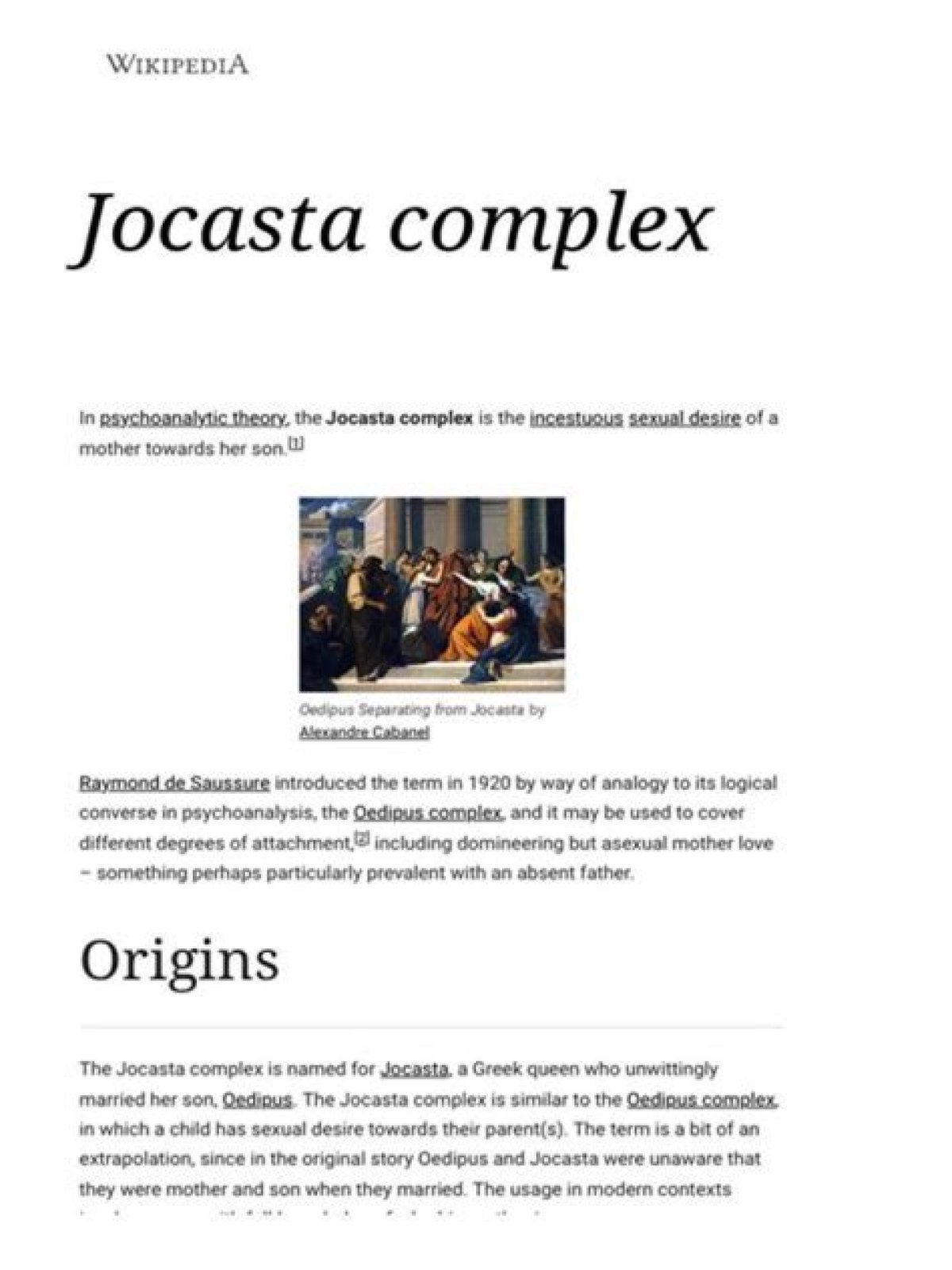
The Jocasta Complex, a term derived from Greek mythology, represents a psychological condition where a mother possesses an unhealthy attachment to her son, often manifesting as romantic feelings. This complex is named after Jocasta, the mother and wife of Oedipus in the tragic story of Oedipus Rex, who unwittingly fulfilled a prophecy that foretold he would kill his father and marry his mother. The implications of such a complex can lead to significant emotional and psychological turmoil for those involved, creating intricate and often disturbing family dynamics.
The exploration of Jocasta complex cases not only sheds light on familial relationships but also delves into the realm of psychology, raising questions about the potential roots and ramifications of such attachments. It can occur in various forms and intensities, often rooted in unresolved psychological issues stemming from childhood. This phenomenon can lead to a cycle of emotional dependency that can have long-lasting effects on both the mother and the son, as well as the broader family unit.
Understanding Jocasta complex cases is crucial for mental health professionals, families, and society at large. By recognizing the signs and symptoms, individuals can seek appropriate help and intervention, fostering healthier family dynamics and personal well-being. This article will explore the intricacies of the Jocasta complex, its psychological implications, and real-world cases that highlight its impact.
What Are the Characteristics of Jocasta Complex Cases?
Jocasta complex cases often exhibit distinct characteristics that can help in identifying the condition. Some of these features include:
- Excessive emotional dependency of the mother on her son.
- Inappropriate expressions of affection that may border on romantic.
- Attempts to control or influence the son’s life decisions.
- Strained relationships with other family members, particularly the father or other parental figures.
What Psychological Factors Contribute to the Jocasta Complex?
The emergence of the Jocasta complex can often be traced back to various psychological factors, including:
- Fear of abandonment: Mothers may cling to their sons due to a fear of losing them emotionally or physically.
- Unresolved issues from their own childhood: Past traumas can lead to unhealthy attachments in adulthood.
- Low self-esteem: A mother with low self-worth may seek validation through her son, leading to complex dynamics.

